
Beyond the Visible: Introducing Desmond Morris and Grace Pailthorpe
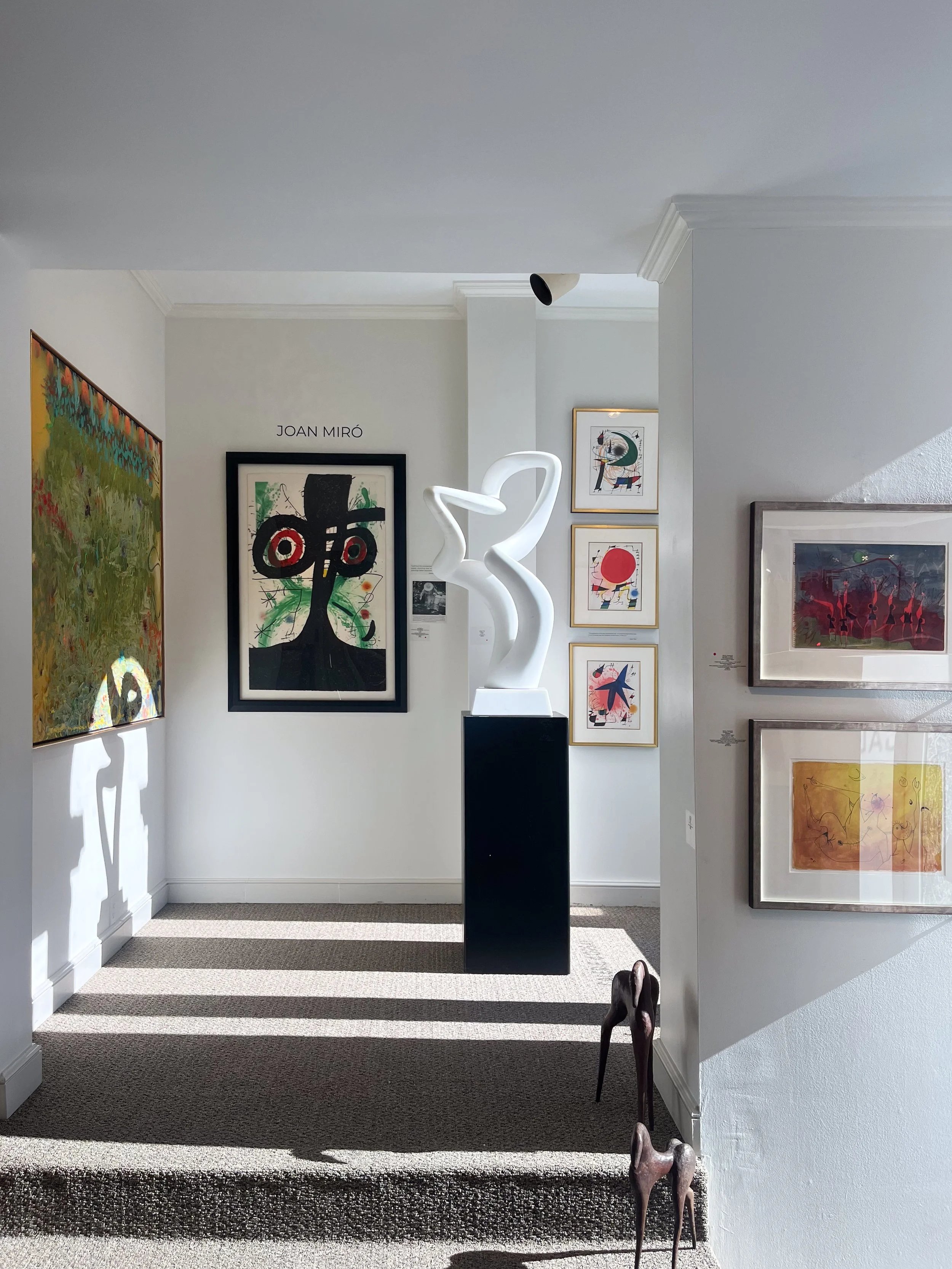
As we enter 2026, Galerie d’Orsay is excited to welcome our friends and collectors to an exhibition that explores the depths of the human imagination. Our first show of the year, The Unbound Mind, traces a path from Surrealism’s early pioneers to today’s visionary voices.
While the gallery is honored to once more feature the masterful draftsmanship of Salvador Dalí and the poetic imagery of Joan Miró, we are particularly thrilled to introduce two extraordinary 20th-century surrealist artists to the Galerie d’Orsay family: Desmond Morris and Grace Pailthorpe. Their work serves as a profound bridge between scientific inquiry and artistic wonder, demonstrating that the mind is at its most potent when truly "unbound."
Desmond Morris: The Last Living Surrealist
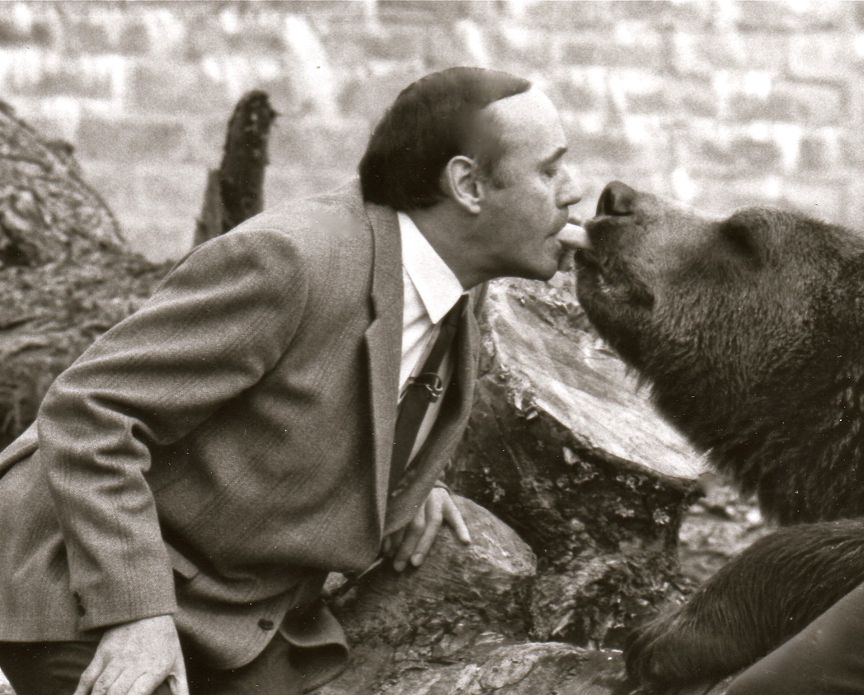
Desmond Morris feeding an adult grizzly bear a banana; Courtesy of the artist
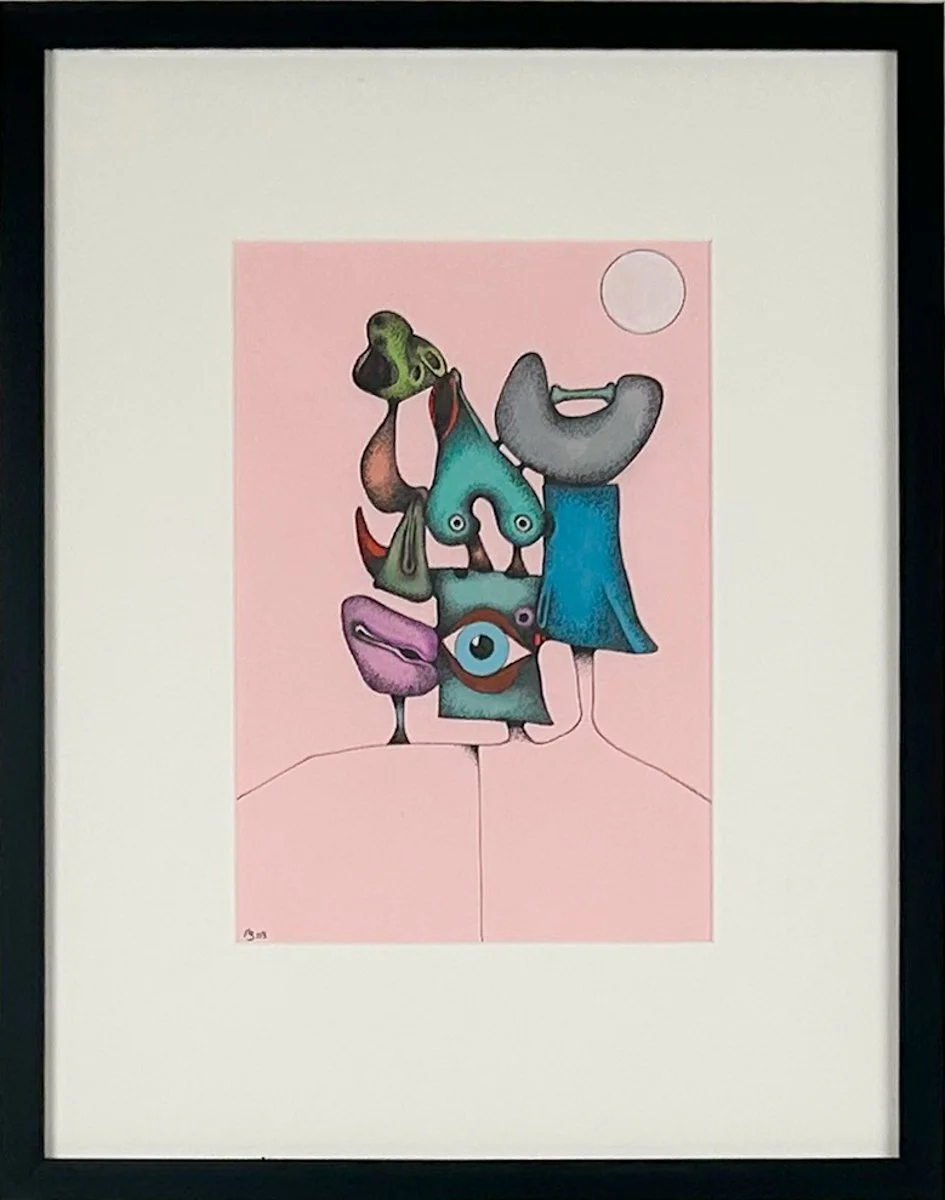
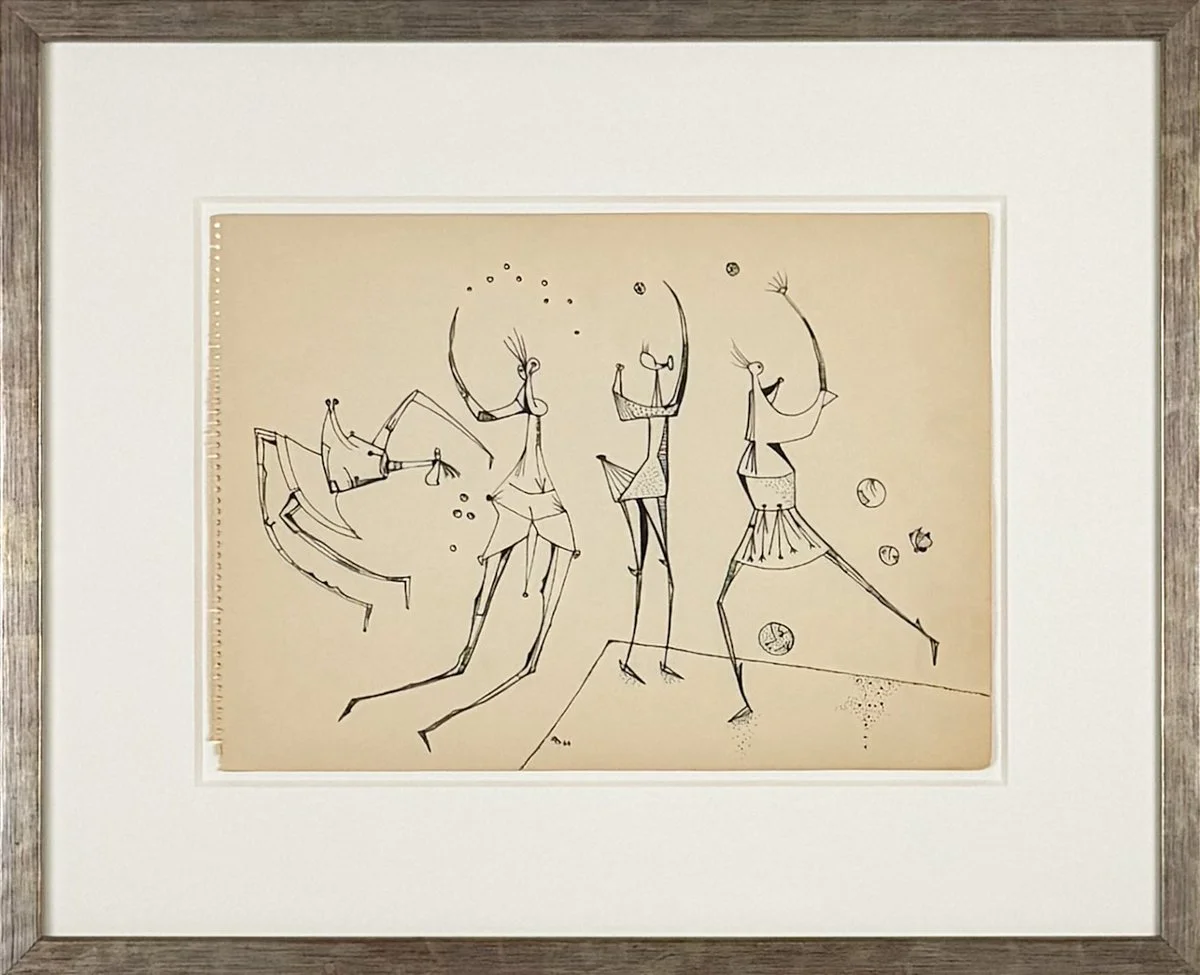
At 98 years old, Desmond Morris (b. 1928) stands as the last living link to the original Surrealist movement. While many know him as the world-renowned zoologist and author of the seminal text The Naked Ape, Morris has led a fascinating "double life" as an artist for over seven decades. His "biomorphs"—meticulously rendered creatures that seem to evolve directly onto the canvas—are born from his deep knowledge of biology but governed by the irrationality of the dream state.
Morris’s process is one of creative spontaneity; he allows these bizarre forms to inhabit their own dimension, often engaging in "ritual" behaviors that mirror human sexuality and social interaction. His compositions frequently place these colorful, alien-yet-familiar entities against stark, eerie landscapes, creating a tension between the biological and the fantastical.
The importance of Morris’s contribution to the Surrealist canon is emphasized by his presence in many world-renowned institutions. His "Surrealist masterpiece," The Arena, was acquired by the Tate in 2000, and his works are part of the permanent collections of the National Galleries of Scotland, the Ashmolean Museum in Oxford, and the Galleria Nazionale d’Arte Moderna in Rome.
Grace Pailthorpe: Surgeon of the Subconscious
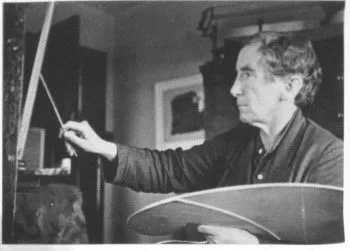
Grace Pailthorpe painting
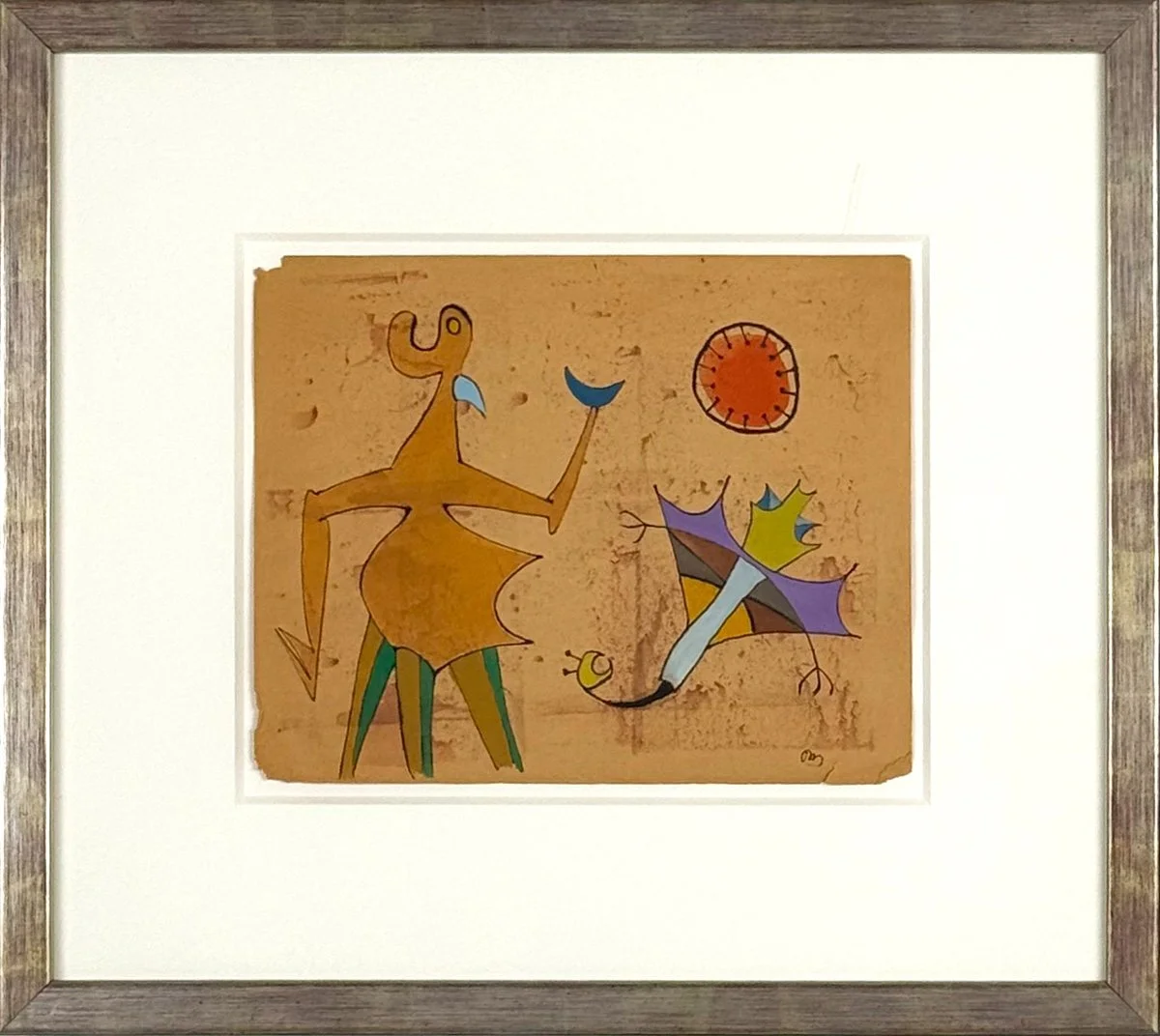
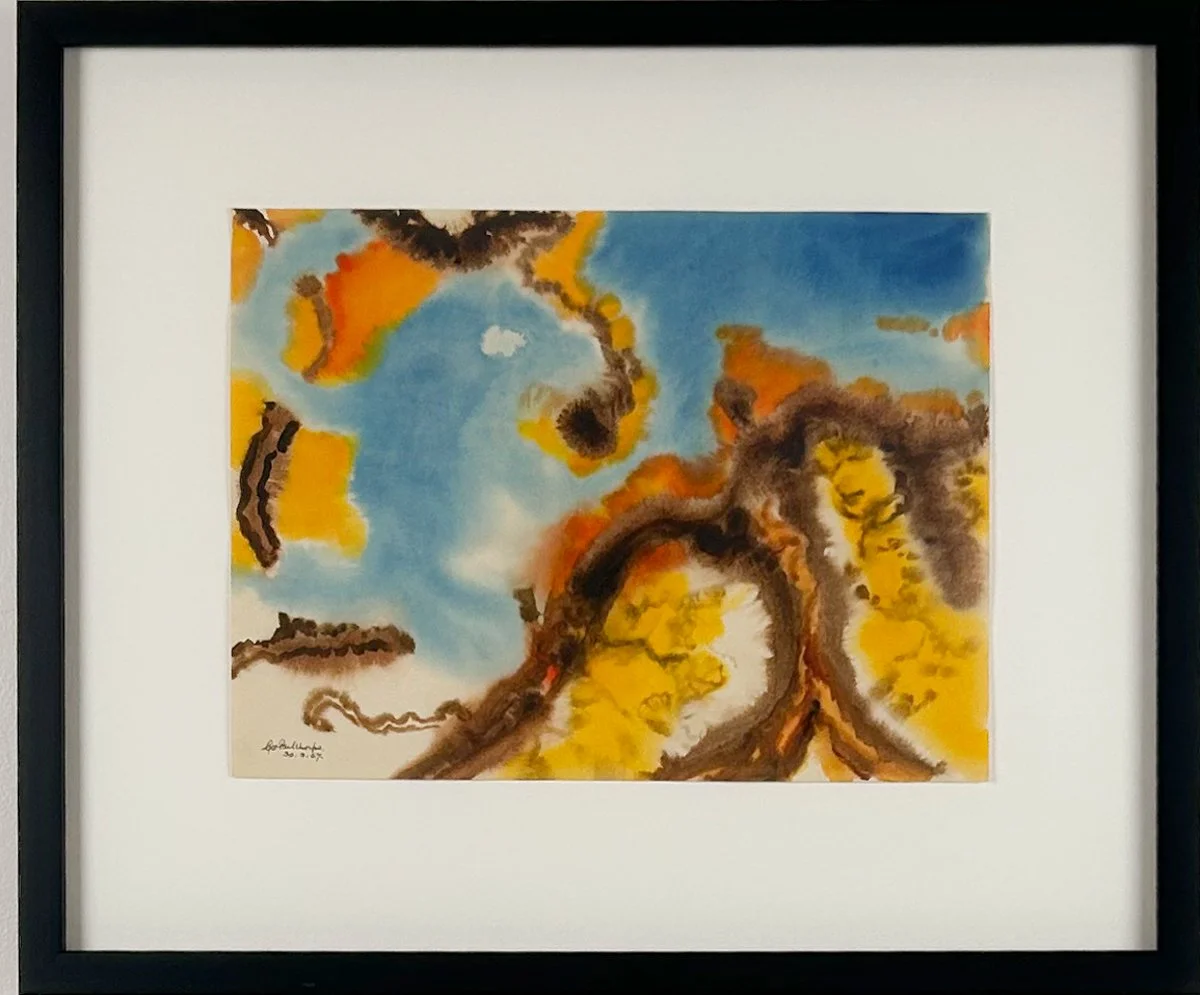
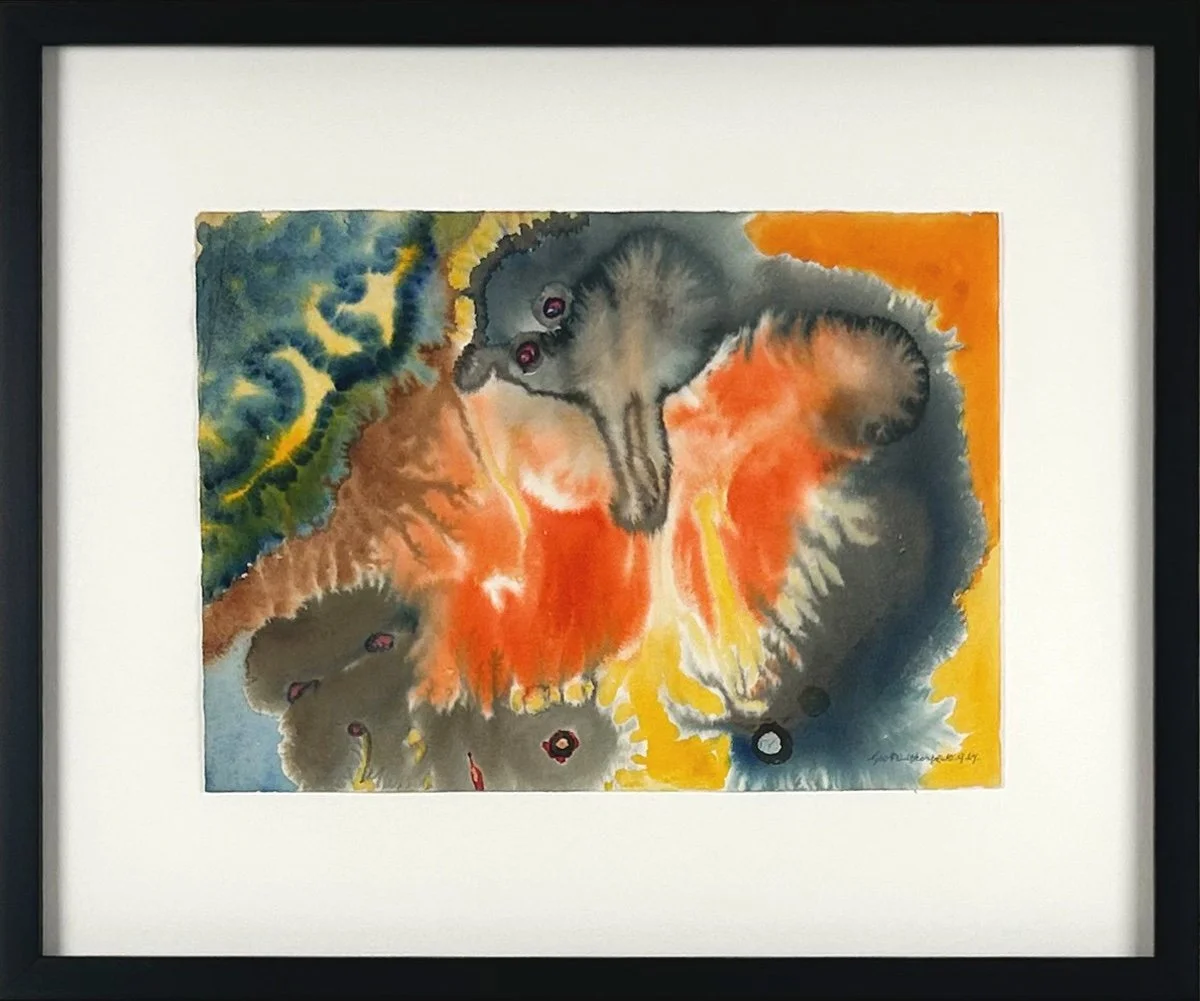
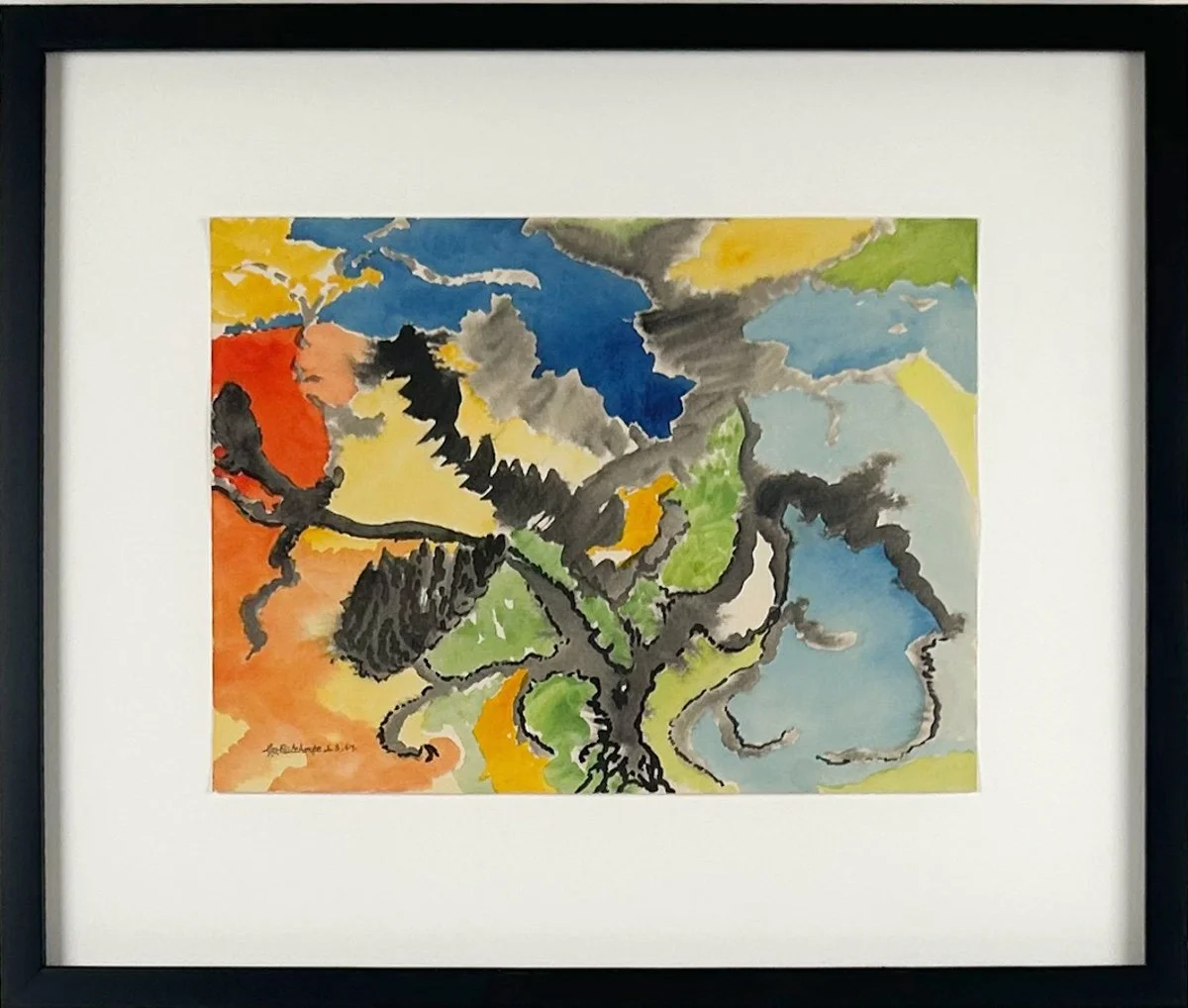
We are equally proud to feature the work of Grace Pailthorpe (1883–1971), a trailblazing figure whose life was as multifaceted as her art. A surgeon during World War I and a pioneering psychology researcher, Pailthorpe viewed the canvas as a "quicker way to the deeper layers of the unconscious than the long, drawn-out couch method." Praised by André Breton as one of the "best and most truly surrealist" artists of her time, Pailthorpe’s work is a vibrant fusion of clinical precision and psychic exploration.
Her artistic process was deeply intertwined with psychoanalytic theory; she and her partner, Reuben Mednikoff, used their paintings as primary documents for analysis, alternating between the roles of patient and analyst to unlock hidden associations. Pailthorpe’s compositions are characterized by fluid, organic shapes and a raw, emotive use of color that seeks to bypass the "censor" of the conscious mind. By focusing on themes of personal liberation and birth, her art serves as a visual map of the internal psyche's struggle for freedom.
Pailthorpe’s works have been exhibited in the Museum of Modern Art (MoMA) in New York, the Victoria and Albert Museum, and the Centre Pompidou in Paris.
A Modern Resonance: Fermin Castro
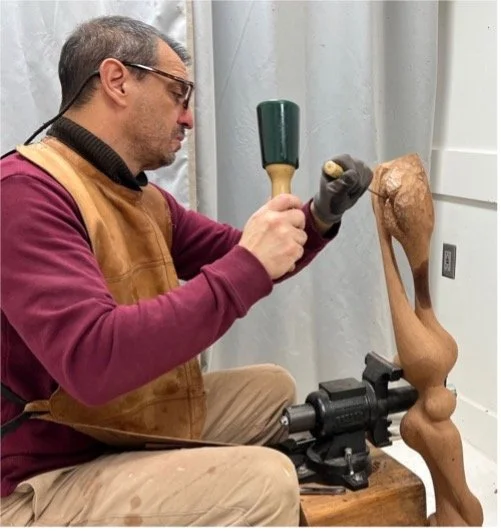
Fermin Castro sculpting in his studio
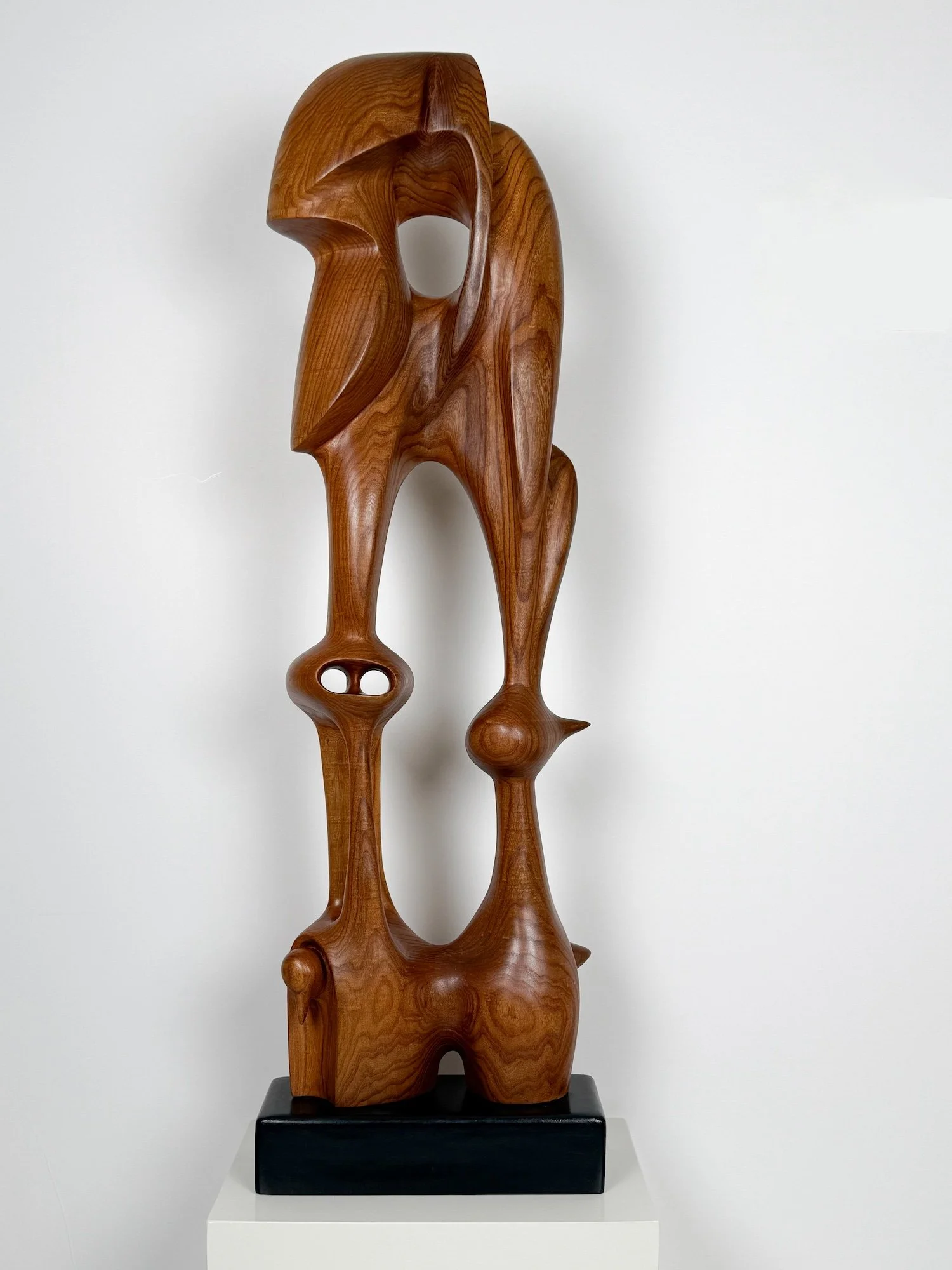
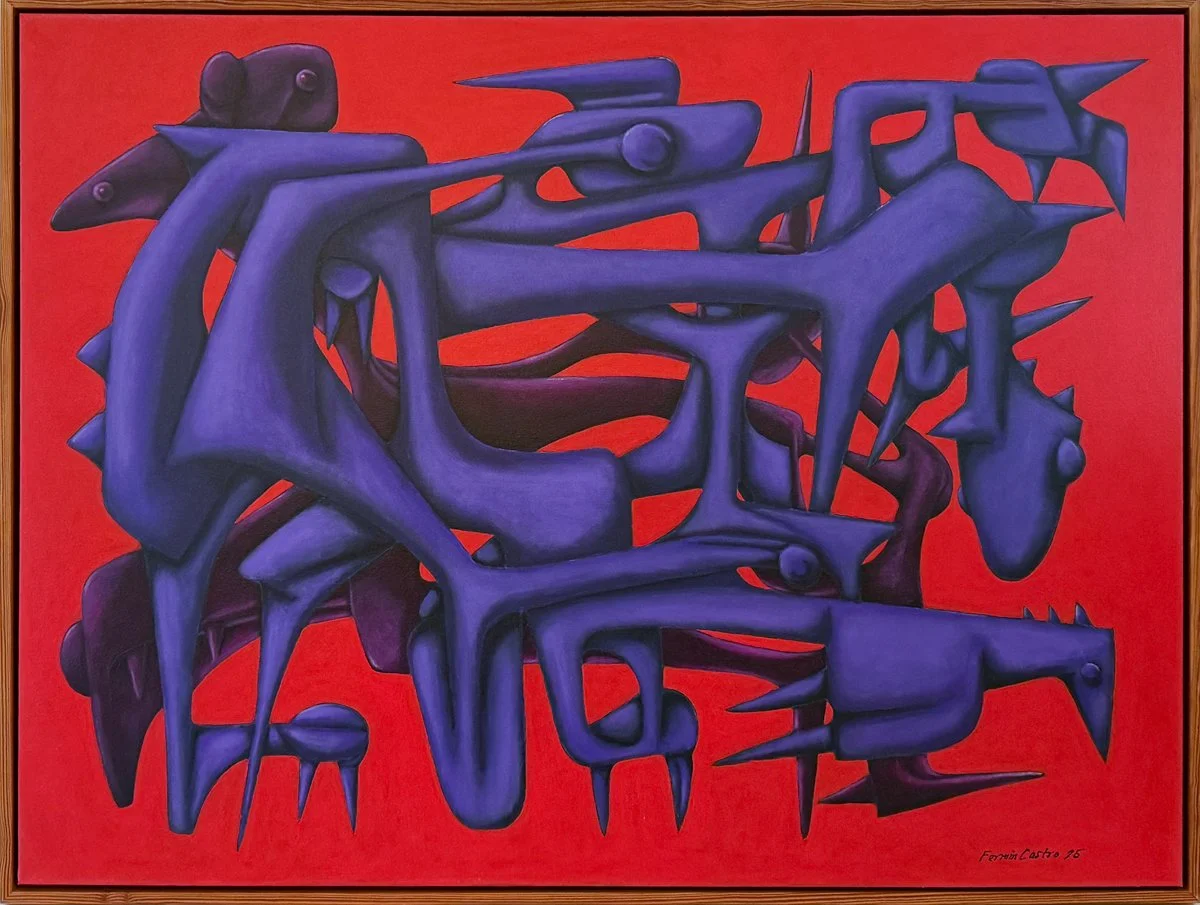
Last, but not least, we are also introducing a brilliant emerging artist based here in Massachusetts, sculptor and painter Fermin Castro. Castro’s abstract-figurative wooden forms draw on his Cuban and Afro-Cuban heritage, transforming natural timber sourced from diverse geographic regions into intricate, mythological worlds. By marrying traditional motifs with contemporary abstraction, Castro provides a vital modern lens through which we can view the enduring mysteries of nature and the spirit. His work serves as a tactile reminder that the subconscious is rooted as much in our cultural ancestry as it is in our individual dreams.
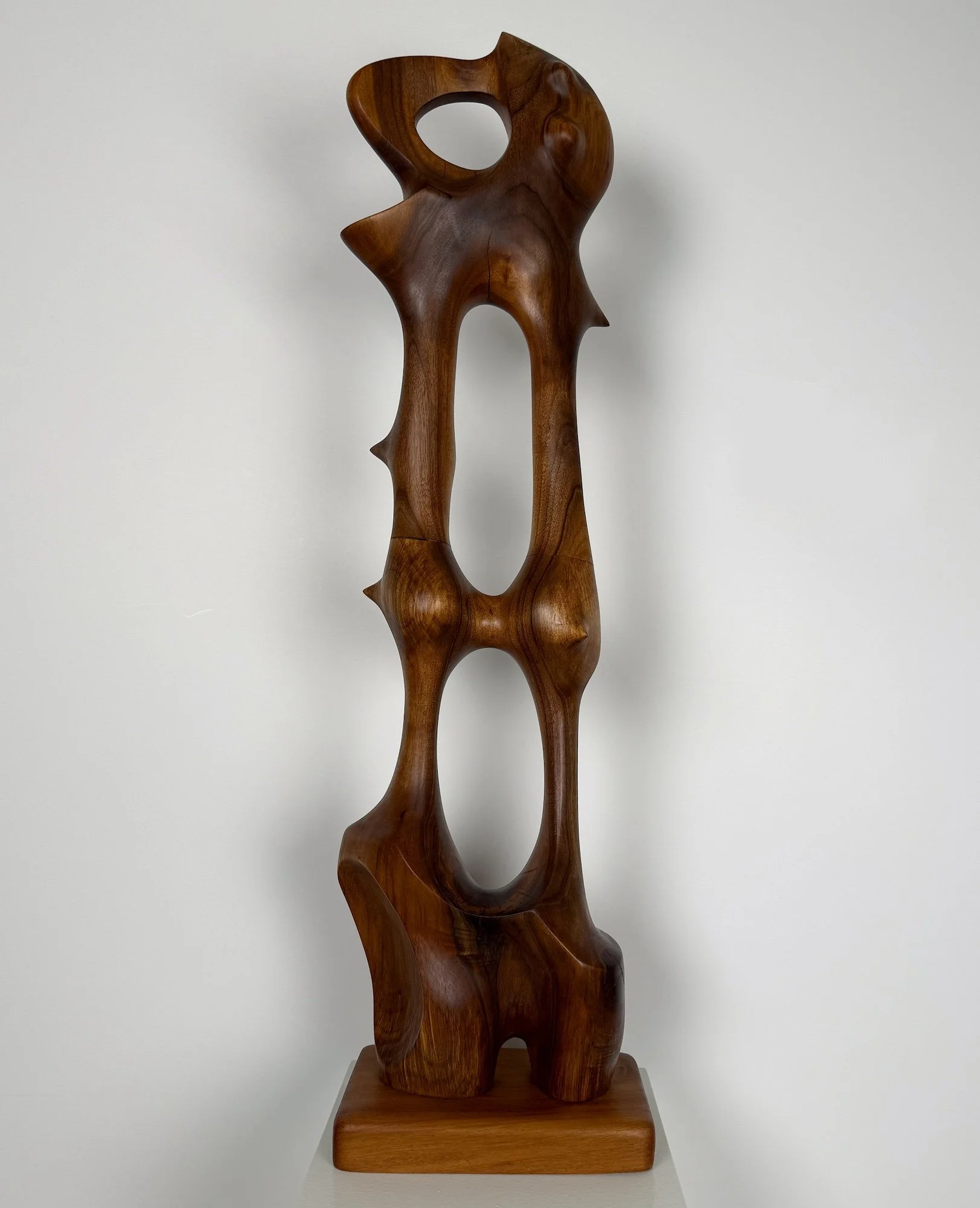
Join Us at Galerie d’Orsay
The Unbound Mind is an invitation to look inward and celebrate a movement that remains deeply connected to the mysteries of the mind. We look forward to seeing you at the gallery to experience these works in person and to celebrate the start of a truly imaginative year.
The show will be up in our gallery through February and March, and can be viewed digitally here.
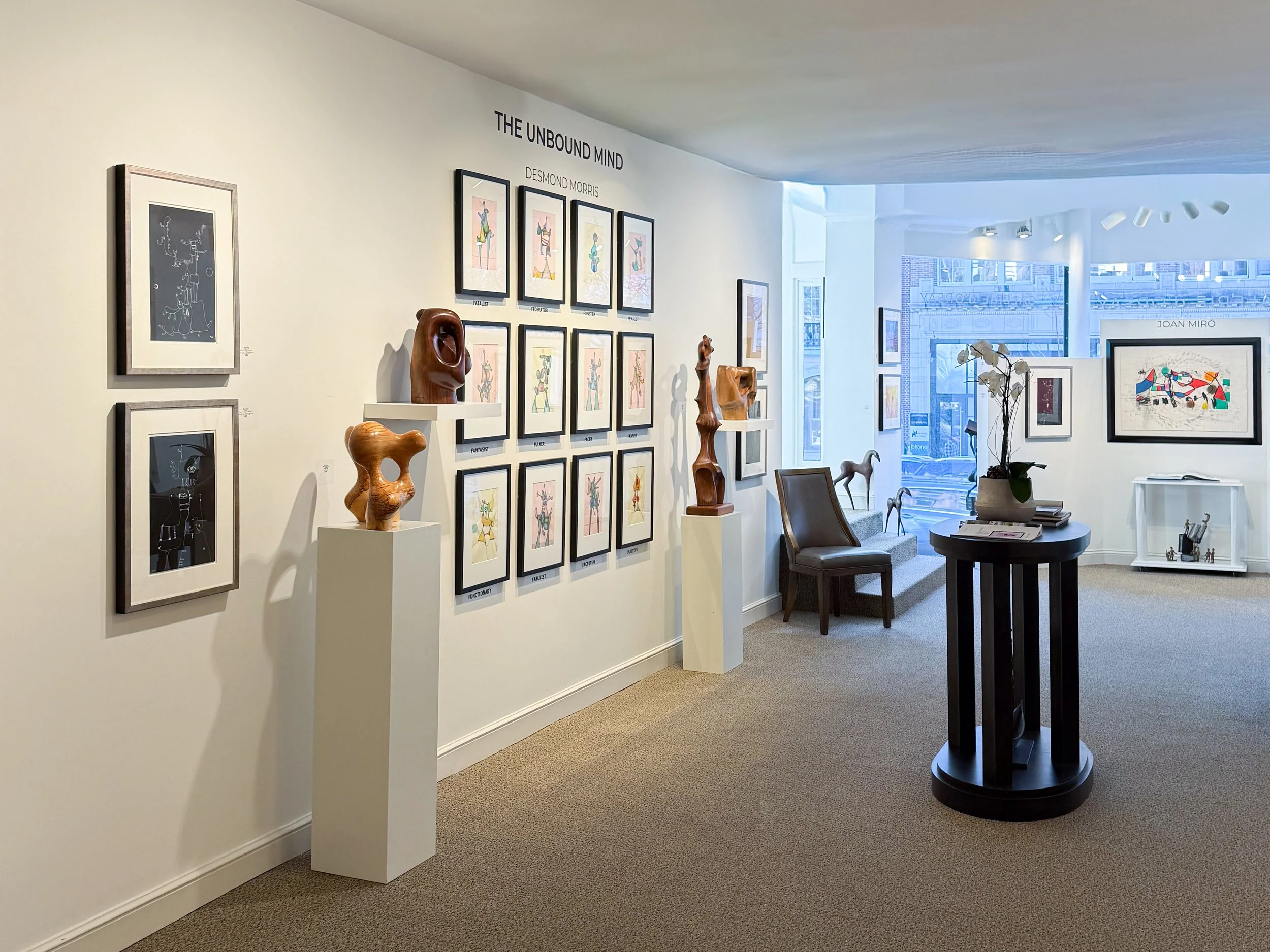
The Unbound Mind at Galerie d’Orsay